What every distributor should check before placing a bulk lubricant order
By Karan Mithe, CEO, Mithe Exports
https://www.linkedin.com/in/karan-mithe-39476b252/
When an importer or distributor starts looking for a lubricant supplier in India, the first question is often:
“Who can give me the best price?”
It is a natural question. In international trade, pricing matters because freight, customs, distribution expenses, and competition can directly affect your profit margin.
But through my experience in export business and discussions with international buyers, I believe there is another question that deserves equal attention:
“Can this supplier deliver the right product, at the agreed quality, in the agreed quantity, and on the agreed timeline?”
A competitive quotation is a good starting point. It is not the complete basis for a successful long-term business relationship.
In this article, I want to share a practical approach that importers and distributors can use when evaluating lubricant suppliers from India.
1. Understand Exactly What You Need Before Requesting a Quotation
Before approaching a supplier, it is important to define your product requirements.
A lubricant supplier may offer engine oils, gear oils, hydraulic oils, industrial lubricants, or greases. However, each category contains different grades and specifications.
For example, a buyer looking for engine oil should consider:
- Required viscosity grade, such as SAE 15W-40 or SAE 20W-50.
- Intended application.
- Required performance specifications.
- Mineral, semi-synthetic, or synthetic formulation, where applicable.
- Packaging size.
- Estimated order quantity.
- Destination country and port.
For industrial lubricants, the requirements may also include the equipment manufacturer’s recommendations, operating conditions, temperature range, and relevant technical specifications.
The more clearly you define your requirements, the easier it becomes to compare suppliers accurately.
My advice: Do not begin your search with only “engine oil price.” Begin with the exact product you need.
2. Check Whether the Supplier Is a Manufacturer, Exporter, or Trading Company
The word “manufacturer” appears frequently in the lubricant market. However, not every company offering lubricants necessarily operates its own manufacturing facility.
A business may be:
- A lubricant manufacturer.
- A contract blender.
- A private-label supplier.
- An exporter working with manufacturing partners.
- A trading or sourcing company.
There is nothing inherently wrong with any of these business models. What matters is whether the supplier is transparent about its role and can fulfil your requirements.
If you are looking for a manufacturer, ask:
“Is this product manufactured at your own facility or sourced from another manufacturer?”
If the supplier works with a manufacturing partner, ask whether the actual manufacturing facility can provide the required product specifications, quality documents, and production support.
For a distributor building a long-term brand, understanding the supply chain is particularly important.
3. Verify the Product Specification Before Comparing Prices
Two lubricant quotations may look similar on paper but represent different products.
For example, two engine oils may have the same viscosity grade but different formulations, additive packages, or performance specifications.
This is why the product name alone should not determine your purchasing decision.
Before comparing quotations, ask for the relevant technical information, such as:
- Technical Data Sheet (TDS).
- Product specification.
- Applicable performance classifications.
- Recommended applications.
- Base-oil information, where relevant and available.
- Safety Data Sheet (SDS), where applicable.
The correct specification depends on the intended application and the requirements of the equipment or market.
A lower price is only meaningful when the products being compared are genuinely suitable alternatives.
4. Ask for Quality Evidence
A supplier’s quality claims should be supported by appropriate documentation.
Depending on the product and the supplier’s quality system, an importer may request:
Certificate of Analysis (COA)
A COA provides information about the tested characteristics of a particular batch. Buyers should confirm which parameters are tested and whether they are relevant to the product specification.
Technical Data Sheet (TDS)
A TDS explains important product characteristics, applications, and technical information.
Safety Data Sheet (SDS)
An SDS provides safety and handling information. It may be particularly important for transportation, storage, workplace safety, and regulatory requirements.
Quality Management Information
Where relevant, buyers may also ask about quality-management systems, testing facilities, and applicable certifications.
However, one important point should be remembered:
A certificate alone does not guarantee that every future shipment will be identical.
For recurring orders, it is important to discuss batch consistency, testing procedures, and how quality concerns will be handled.
5. Request a Sample or Trial Order When Appropriate
A sample or trial order can help an importer understand the product and the supplier’s process before committing to a larger purchase.
For example, a buyer may wish to evaluate:
- Packaging quality.
- Product documentation.
- Label accuracy.
- Product suitability for the intended application.
- Communication and response time.
- Shipment preparation.
For larger commercial orders, a trial shipment may also help the buyer assess the supplier’s ability to coordinate production, documentation, and logistics.
The exact sample arrangement and minimum order quantity will depend on the supplier and product.
My recommendation: If you are establishing a new supplier relationship, agree on the evaluation process before placing a substantial order.
6. Understand Packaging and Private-Label Requirements
Packaging is not simply a matter of choosing a container.
For lubricant importers and distributors, the right packaging must suit the market, product, handling requirements, and distribution channel.
Common formats may include:
- 1-litre containers.
- 5-litre containers.
- 20-litre pails.
- 26-litre packs.
- 210-litre drums.
- Other bulk formats, depending on the product.
If you are launching your own lubricant brand, there may also be requirements for:
- Label design.
- Brand identity.
- Product information.
- Batch coding.
- Packaging materials.
- Minimum quantities per product.
- Export-market labelling.
Before confirming an order, ask the supplier:
“Can you support my required packaging and private-label specifications, and what is the minimum order quantity?”
This question can prevent misunderstandings later.
7. Compare the Complete Landed Cost
One of the most common mistakes in international purchasing is comparing only the ex-factory product price.
Suppose Supplier A offers a lower price than Supplier B. That does not automatically mean Supplier A will be cheaper when the goods arrive at your destination.
Your total landed cost may include:
Product Price + Inland Transport + Export Charges + Freight + Insurance + Destination Charges + Applicable Duties and Taxes + Other Costs
The exact calculation depends on the agreed Incoterm, destination, product, shipment size, and applicable regulations.
For example, an importer shipping lubricants from India to Dar es Salaam should evaluate the complete cost of getting the goods to the intended destination—not just the price quoted at the factory.
When requesting a quotation, provide:
- Product and grade.
- Packaging.
- Quantity.
- Destination port.
- Preferred Incoterm.
- Any special documentation requirements.
This allows the supplier to prepare a more relevant commercial offer.
8. Check Lead Times and Shipment Planning
A good product at a competitive price is not enough if the shipment arrives too late for your business.
Before placing an order, discuss:
- Production or stock availability.
- Expected dispatch date.
- Packaging preparation.
- Documentation timeline.
- Estimated transit time.
- Shipment coordination.
- What happens if there is a delay.
Importers should distinguish between production lead time and shipping transit time.
Production lead time refers to the time required to prepare the goods. Transit time refers to the time the shipment takes to move between locations.
These are separate parts of the purchasing process.
A supplier who communicates these timelines clearly can help the buyer plan inventory more effectively.
9. Review Payment Terms and Commercial Conditions
Payment terms should be discussed before the order is confirmed.
Depending on the supplier, buyer, and commercial relationship, arrangements may include advance payment, payment against shipping documents, or other mutually agreed terms.
Before making a payment, ensure that you understand:
- The total order value.
- Payment schedule.
- Bank details and beneficiary name.
- Quotation validity.
- Product and packaging details.
- Delivery terms.
- Conditions for changes or cancellation, where applicable.
For a first transaction, both parties should aim for clear written commercial terms.
Transparency at the beginning can prevent disputes later.
10. Evaluate Communication and Long-Term Support
This is one of the most important factors in international business, and it is sometimes overlooked.
A supplier relationship does not end when the first invoice is issued.
After the order, you may need support with:
- Production updates.
- Documentation.
- Shipment coordination.
- Product questions.
- Reorders.
- Packaging changes.
- Quality concerns.
Ask yourself:
“Can I communicate with this supplier easily when something important needs to be resolved?”
A reliable communication process can make a significant difference when managing international shipments.
Price matters, but so does the ability to work together when unexpected situations arise.
11. Be Careful with Unusually Low Quotations
When a supplier offers a price substantially below other comparable quotations, it is worth investigating.
There may be a legitimate explanation:
- Different base-oil formulation.
- Different additive package.
- Different packaging.
- Different Incoterm.
- Different order quantity.
- Temporary stock availability.
- Different product specification.
However, it is important not to assume that the cheapest quotation represents the same product or commercial conditions.
Ask the supplier to explain the differences.
A professional comparison should consider product suitability, documentation, quality requirements, packaging, landed cost, and supply reliability.
A Practical Supplier Evaluation Checklist
Before confirming your first bulk lubricant order, review the following:
- Product grade and intended application confirmed.
- Technical Data Sheet reviewed.
- Relevant product specifications confirmed.
- Supplier’s manufacturing or sourcing role understood.
- Quality documentation discussed.
- Sample or trial-order requirements agreed, where appropriate.
- Packaging and labelling confirmed.
- Quantity and minimum order requirements understood.
- Incoterm and destination clearly stated.
- Landed-cost calculation reviewed.
- Production and dispatch timelines agreed.
- Payment terms confirmed in writing.
- Communication and after-sales support discussed.
This checklist is not a substitute for product-specific technical or regulatory due diligence. It is a practical starting point for a more informed purchasing conversation.
My View as an Exporter
As an exporter, I understand why price is one of the first things an importer looks at.
Every buyer wants a competitive quotation. That is completely reasonable.
But I believe the strongest international business relationships are built when both sides understand the complete transaction.
The buyer should know what product he is purchasing, what specification it meets, how it will be packaged, how it will be shipped, and what the total cost will be.
The supplier should understand the buyer’s market, application, quantity, and expectations.
When these details are clear, price negotiations become more productive.
Instead of discussing only:
“Can you reduce your price?”
The conversation can become:
“Can we find the right product, specification, packaging, and commercial arrangement for a long-term supply relationship?”
That is the type of business relationship I want to build through Mithe Exports.
Final Thoughts for International Buyers
If you are searching for a lubricant supplier in India, do not make your decision based on price alone.
Look at the complete picture:
Product Specification + Quality Evidence + Packaging + Landed Cost + Lead Time + Communication + Long-Term Reliability
A supplier who understands your requirements and communicates clearly can help make international purchasing more predictable.
Whether you are an importer, distributor, wholesaler, or industrial buyer, taking time to evaluate your supplier before placing an order is a worthwhile investment.
About the Author
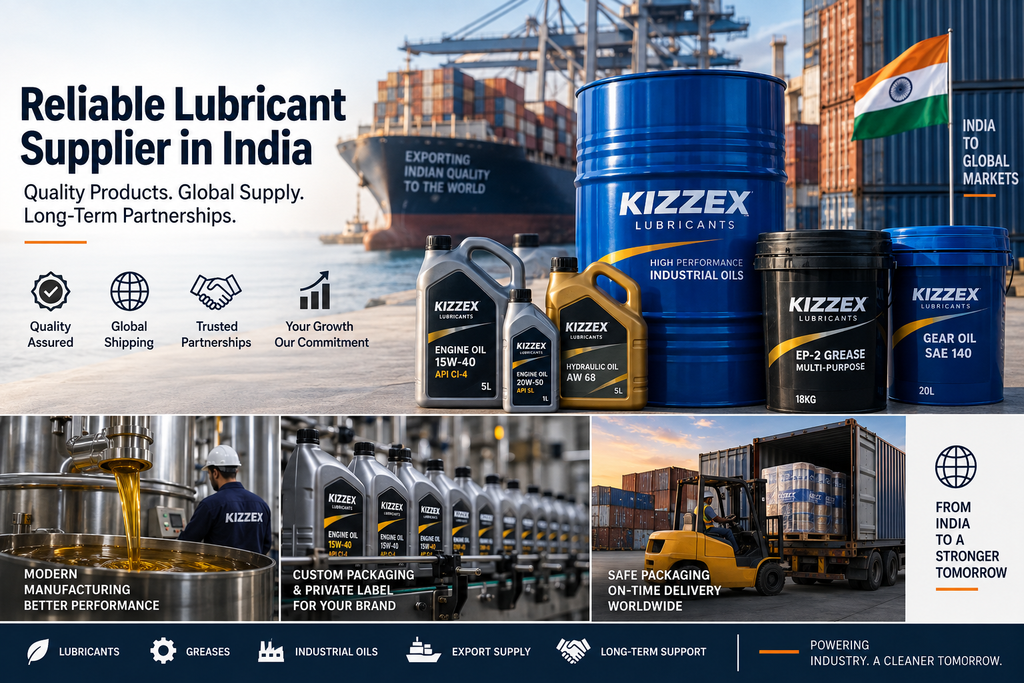
Karan Mithe is the CEO of Mithe Exports, an India-based export and manufaturing company working with international buyers across lubricants, greases, and industrial products.
Through his work with international buyers and suppliers, Karan focuses on practical export pricing, product requirements, sourcing, and building transparent, long-term B2B business relationships.https://www.linkedin.com/in/karan-mithe-39476b252/
Looking for lubricant supply from India?
If you are an importer, distributor, or wholesaler, share your required product, viscosity grade, packaging, quantity, and destination with the Mithe Exports team.https://mitheexports.com/lubricants-greases/
Request a Product Quote